
- Good news! Chongqing Defang has been listed on the "Artificial Intelligence Medical Device Innovation Task List" of the Ministry of Industry and Information Technology.
- Chongqing Defang 2022-08-30 12:10
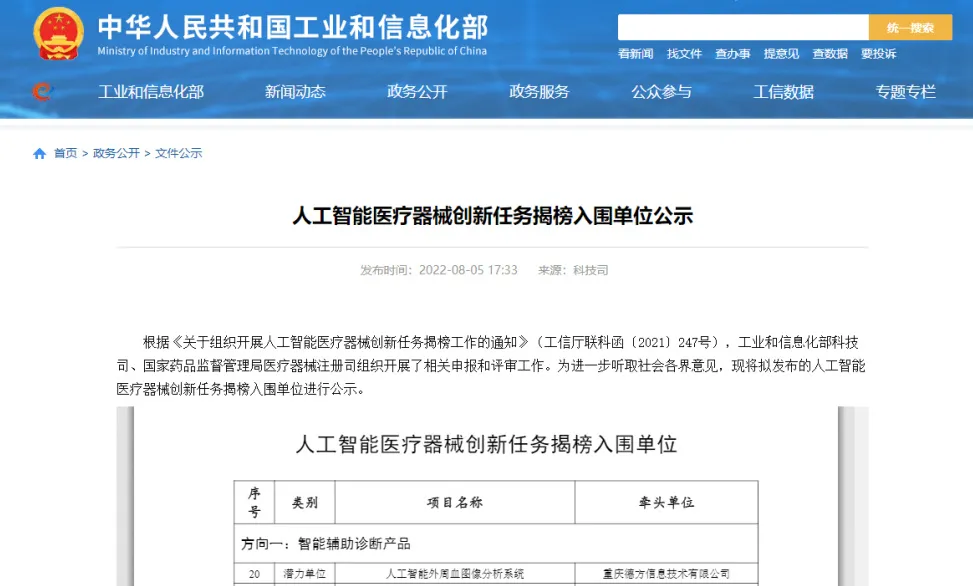
Recently, the Department of Science and Technology of the Ministry of Industry and Information Technology and the Department of Medical Device Registration of the National Medical Products Administration announced the list of shortlisted units for the "Artificial Intelligence Medical Device Innovation Task Challenge". Chongqing Defang Company stood out among over a thousand submitted projects with its "Artificial Intelligence Peripheral Blood Image Analysis System" project and successfully made the list, being shortlisted as a "Potential Unit".
This means that Chongqing Defang Company's innovative strength in the field of artificial intelligence medical devices has been recognized by a national authoritative institution!
Why was the peripheral blood image analysis system project able to stand out and gain national recognition?
In peripheral blood morphology detection, microscopic examination remains the gold standard for peripheral blood cell morphology testing. However, due to the fact that traditional microscopic examination relies on manual detection, it is time-consuming and labor-intensive. Especially in grassroots hospitals without talent reserves, it is very likely to lead to missed diagnosis and misdiagnosis in clinical practice.
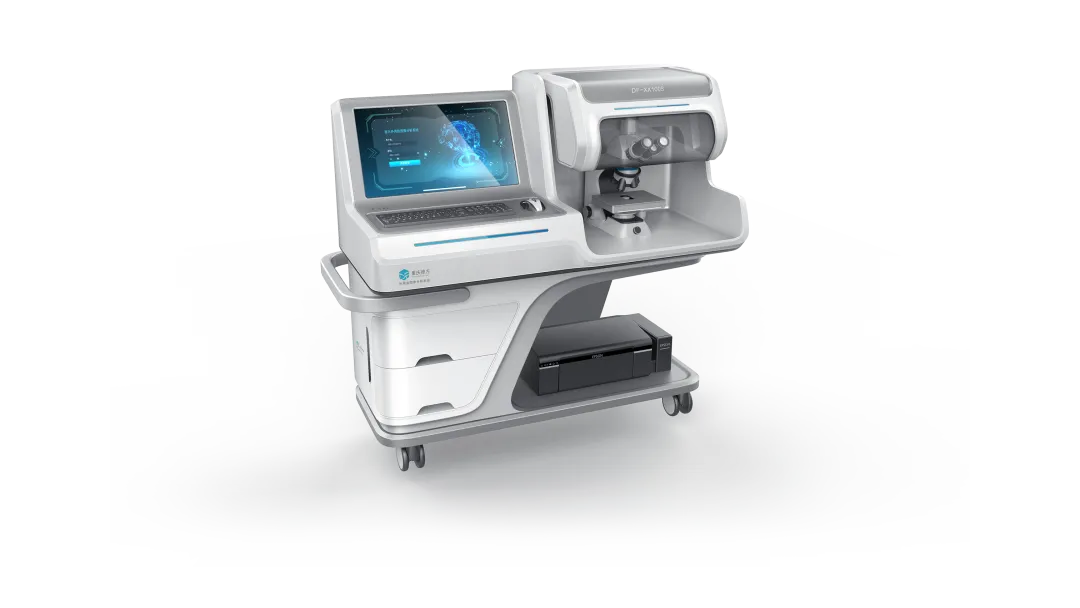
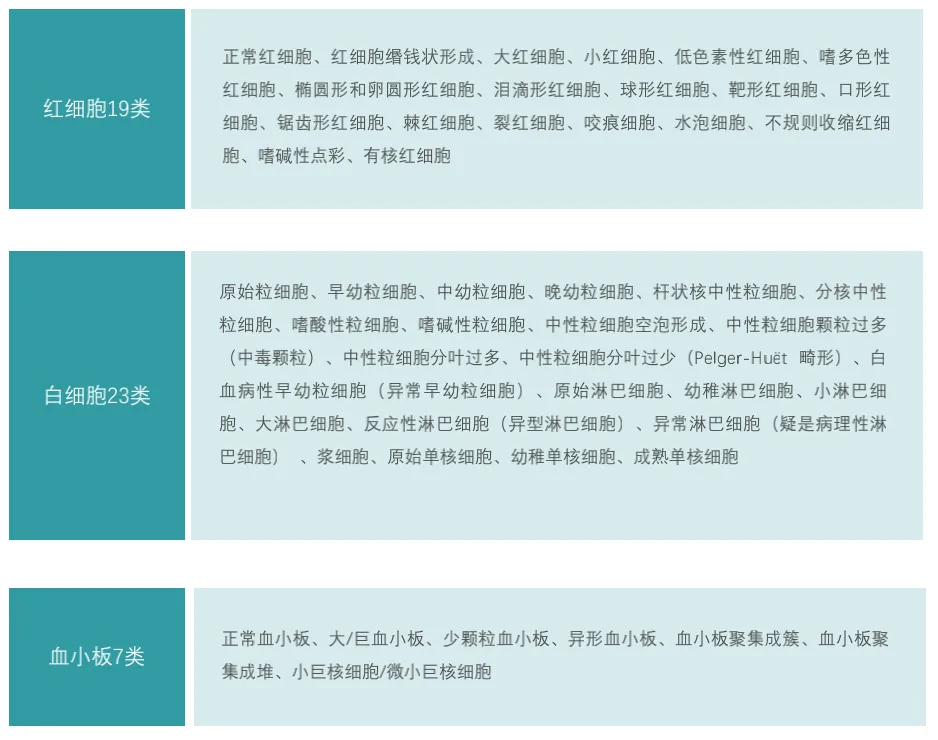
The new generation of artificial intelligence peripheral blood image analysis system (DF-XX100S Hooke) from Defang Company is a solution to the current predicament of peripheral blood re-examination. This innovative clinical testing device for intelligent recognition of blood cell morphology adopts microscopic cell image acquisition and artificial intelligence recognition technology for cell image morphology. It can achieve the classification and counting of 49 types of abnormal blood cells (including white blood cells, red blood cells and platelets), and provide diagnostic reference conclusions, offering auxiliary diagnostic basis for blood system diseases.
Led by authoritative clinical experts in hematology and medical laboratory experts, and jointly developed by mid-to-senior level laboratory physicians and experts in artificial intelligence image recognition algorithms, it is a "good helper" for peripheral blood re-examination and blood cell morphology diagnosis.
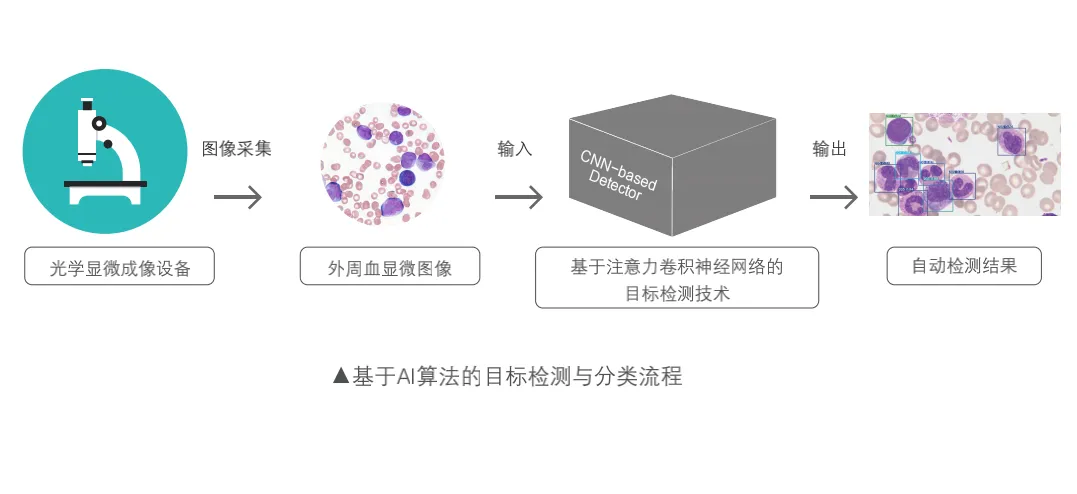
The deep learning technology combining CNN and GAN truly realizes artificial intelligence
The latest CNN+GAN Service Network image classification and recognition technology is adopted to recognize the collected cell images. Compared with the traditional big data comparison recognition and manual feature definition recognition, the advantage of this technology lies in that it can recognize more types and has a higher comprehensive recognition rate.
The mean average precision mAP is greater than 90%, ensuring the accuracy of all items
The traditional evaluation index is the accuracy rate of single-cell recognition, but the evaluation index of the German system is the mean average precision mAP. When the samples are unbalanced, the accuracy rate of single-cell recognition cannot comprehensively measure the system performance. However, mAP (mean AveragePrecision) is obtained by comprehensively weighted averaging the average accuracy rate (AP) of all category detections, which can more comprehensively measure the system performance. mAP is between 0 and 1, and the larger the better. This indicator is the most important one in the object detection algorithm.
Providing 49 types of cell recognition for clinical diagnosis is far superior to existing technologies
Currently, the devices on the market can only recognize 9 types of cells, while the German peripheral blood image analysis system has been upgraded to be capable of recognizing 49 types of cells.
The combination of artificial intelligence counting and expert decision-making provides clinical doctors with diagnostic opinions
Based on the traditional counting method, it has been upgraded to an auxiliary diagnostic function to enhance the professional capabilities of clinical laboratory personnel and reduce the rate of misdiagnosis and missed diagnosis.
Based on the cell count results intelligently analyzed by the German system, the examination results are automatically generated. Through the intelligent decision tree principle combining artificial intelligence and experts, a feasibility report analysis is automatically formed and diagnostic opinions are provided to doctors, effectively solving the current problems in the clinical laboratory department such as unclear recognition, inaccurate recognition, large errors, and inconsistent standards.
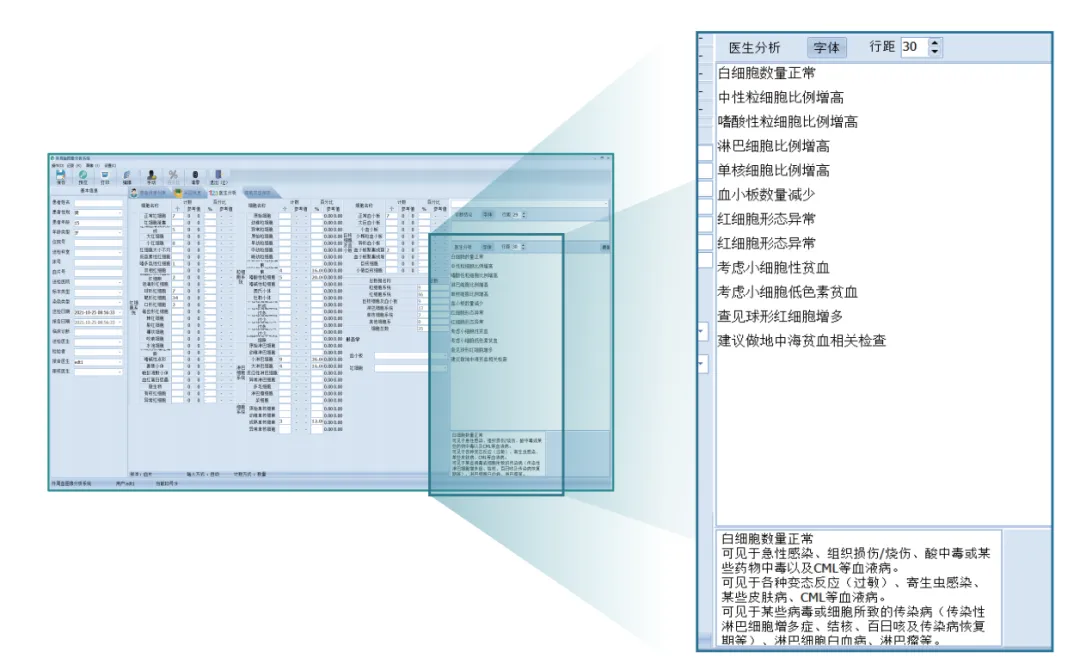
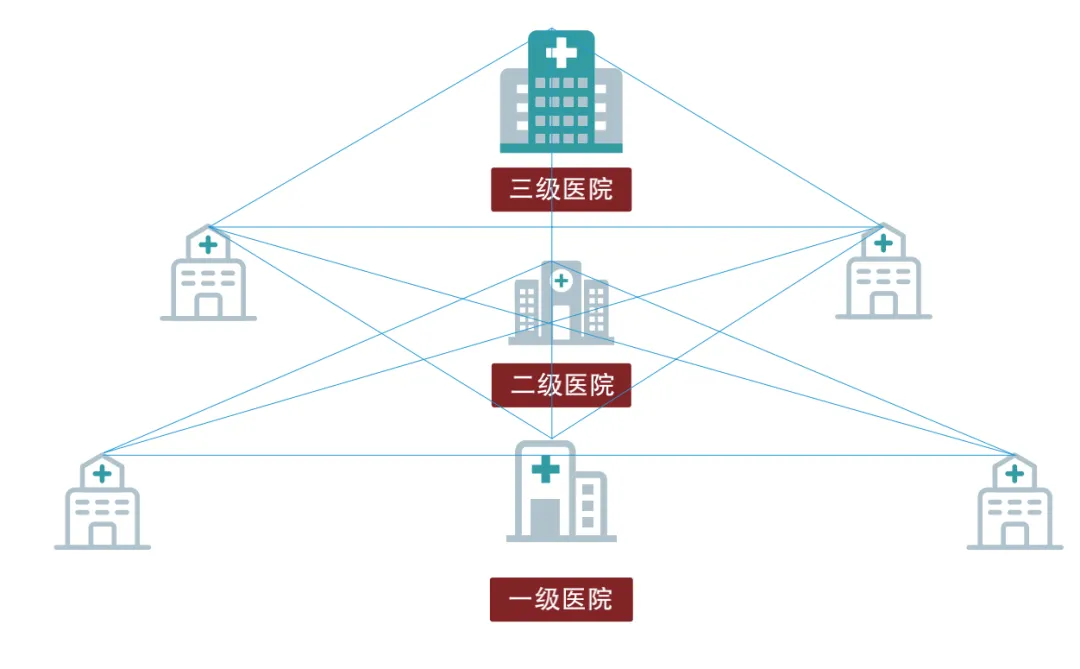
Remote consultation enables real-time interaction between superiors and subordinates to enhance the medical standards at the grassroots level
The German peripheral blood image analysis system offers a remote consultation function for doctors to help doctors. When lower-level hospitals are unable to make a judgment, they can initiate an auxiliary diagnosis request online to the higher-level guiding hospital, and the higher-level guiding hospital can provide real-time diagnostic opinions online.
Through a one-to-many approach, real-time interaction between upper and lower-level hospitals has been achieved, allowing the wisdom of morphological experts to reach the grassroots level, enhancing the professional capabilities of grassroots laboratory doctors, and enabling leading hospitals to fully play their role as regional leaders in providing assistance. Through joint development, the medical level at the grassroots level has been improved.
The German peripheral blood image analysis system, which has been meticulously developed over a period of five years, has resolved the current difficulties in clinical morphology examination, talent cultivation, and the inability to further enhance efficiency. It has improved the diagnostic and testing capabilities of grassroots hospitals and brought tangible economic and social benefits to them. Helping grassroots hospitals keep patients at the grassroots level and easing the pressure on higher-level hospitals for seeking medical treatment is fully in line with the national regulations on hierarchical medical treatment and the national policy direction.
In the future, Defang Information will continue to invest in artificial intelligence morphological examination, dedicated to the research and development and production of over ten intelligent recognition systems for morphological images of human tissue cells and blood cells (such as vaginal discharge, peripheral blood, cervical cancer, prostate, pathology, etc.), and integrate the national human cell big data to participate in the construction of the Defang Doctor diagnosis database. Ai-assisted disease diagnosis improves medical standards.
- < PrevFocusing on Precision: The German side, in collaboration with Xinqiao Hospital, forges a "powerful tool" for breaking the mold in morphological testing and showcases it at the Medical Annual Conference
- > NextThe "new generation" AI peripheral blood morphology testing system from the German side has been launched with a bang!
Lead a new revolution in blood cell testing