
- Focusing on Precision: The German side, in collaboration with Xinqiao Hospital, forges a "powerful tool" for breaking the mold in morphological testing and showcases it at the Medical Annual Conference
- Chongqing Defang 2022-12-18 11:37
The 11th Two Rivers Forum on Hematology and Oncology and the 2022 Academic Annual Conference of the Cell Therapy Specialized Committee of Chongqing Society of Integrated Traditional Chinese and Western Medicine were successfully held from December 23rd to 25th. At this conference, authoritative experts from renowned domestic and international hematology and oncology institutions engaged in academic exchanges with top domestic peers both online and offline on hot issues such as hematopoietic stem cell transplantation and tumor immunology, providing a platform for learning and communication for hematology medical workers across the country.
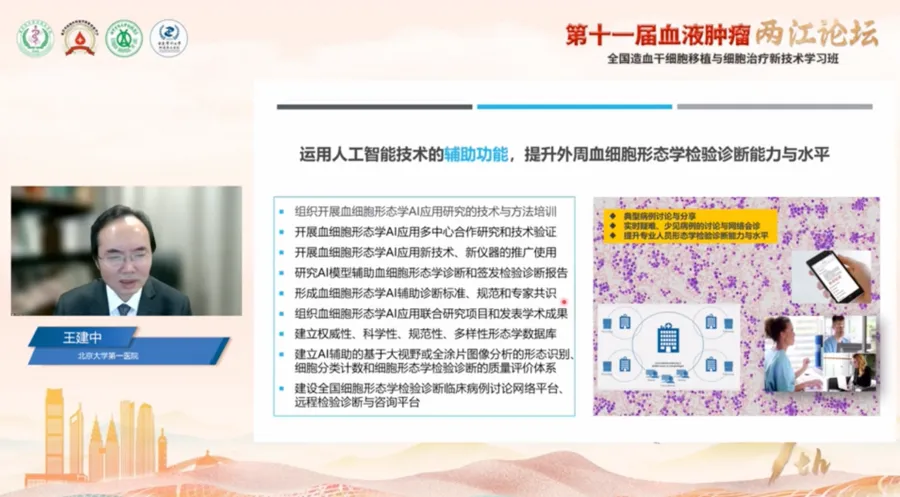
At the sub-forum meeting, Professor Wang Jianzhong from Peking University First Hospital judged that the auxiliary diagnostic function of artificial intelligence technology will be the main development trend of peripheral blood cell morphology examination and diagnosis in the future. The morphological examination and diagnosis of peripheral blood cells mainly rely on manual microscopic observation. Due to factors such as manual operation, its clinical application and development speed have been severely restricted. The rapid development and initial clinical application of fully automatic digital image analysis technology have brought breakthrough progress to the morphological examination and diagnosis of peripheral blood cells and may gradually replace most manual microscopic morphological examinations.
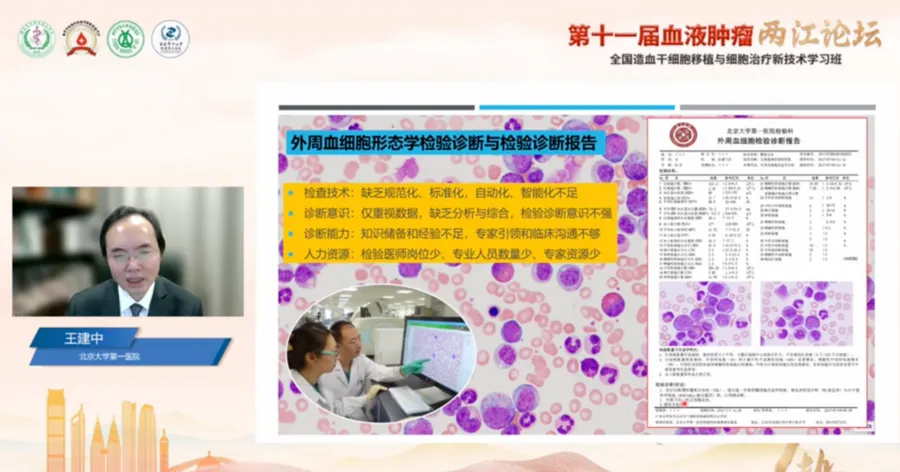
Professor Wang Jianzhong stated that only by providing a peripheral blood cytology test and diagnosis report with rich graphic and textual interpretations, precise test results, and clear laboratory diagnoses in combination with clinical practice can the value of laboratory medicine be fully demonstrated. At present, the clinical demands and development predicaments existing in the industry also need to be urgently addressed: in terms of examination techniques, there is a lack of standardization, normalization, automation and intelligence. In terms of diagnostic awareness, only data is emphasized, lacking analysis, and the awareness of testing and diagnosis is not strong. In terms of diagnostic capabilities, there is a lack of knowledge reserves and experience, and there is insufficient expert guidance and clinical communication. In terms of human resources, there are few positions, a small number of professionals and a shortage of expert resources.
Based on the clinical demands and development predicaments of peripheral blood morphology examination, Xinqiao Hospital of Army Medical University and Chongqing Defang Information Technology Co., Ltd. have joined forces to leverage their respective strengths. By taking artificial intelligence technology as the key point, they aim to empower clinical morphology examination and achieve quality improvement and efficiency enhancement. A "powerful tool" for breaking the deadlock in morphological examination was jointly developed - the AI-assisted diagnosis system for peripheral blood morphological examination (Peripheral blood image Analysis System DF-XX100S Huke), which was also showcased at the conference. Professor Peng Xiangui from the Hematology Medical Center of Xinqiao Hospital elaborated on this scientific and technological achievement.
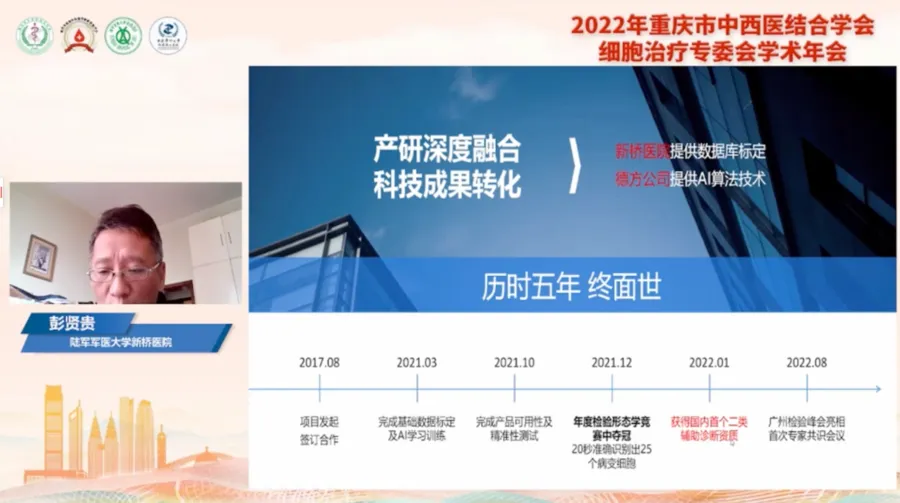
The Hematology Medical Center of Xinqiao Hospital is equipped with leading diagnosis and treatment technologies in China, abundant pathological resources and a strong teaching team. It is mainly responsible for the annotation of blood cells. Chongqing Defang Information Technology Co., Ltd. possesses the capabilities of artificial intelligence technology research and development, product development and sales. It has participated in multiple national medical research projects and holds nearly a hundred patent technologies. The company is mainly responsible for AI algorithm technology.
After five years of research and annotation of over 100,000 cells by the Military Blood Center of Xinqiao Hospital, the AI deep learning training, software design, system testing and other stages of the CNN+GAN algorithm model independently developed by Chongqing Defang Information Technology Co., Ltd. were finally completed. In January 2022, all relevant medical qualifications were obtained.
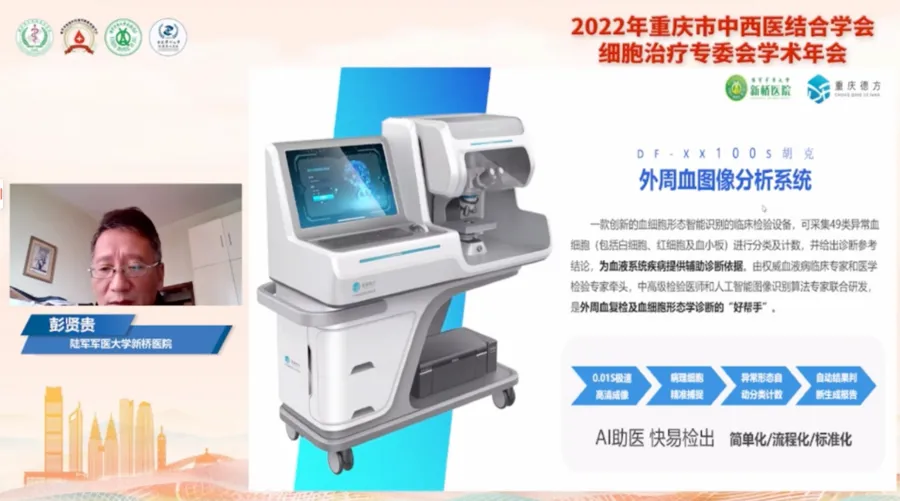
AI replaces manual recognition
The peripheral blood image analysis system (DF-XX100S Hooke) has pioneered standardized and process-based morphological detection, achieving intelligent microscopic examination within 3 minutes. Through AI, it perfectly replicates the manual microscopic examination process, liberating human resources and significantly enhancing the efficiency and quality of clinical microscopic examination. Compared with human labor, AI is not disturbed by factors such as fatigue and emotional fluctuations. At the same time, it integrates the wisdom of many experts, and its recognition level remains consistent. Professor Peng Xiangui introduced that currently, this system can identify 49 types of abnormal blood cells, with an average recognition rate exceeding 90%, covering most of the common types in clinical practice. It has a high pathological coincidence rate and meets the clinical recognition requirements.
Morphological examination technology upgrade: The counting level has been upgraded to the auxiliary diagnostic level
At present, the existing morphological examination tools on the market are still at the counting level, limited to the classification and counting of blood cells, and cannot provide diagnostic suggestions. Based on clinical needs, Chongqing Defang Information Technology Co., Ltd. has joined hands with the Hematology Medical Center of Xinqiao Hospital to establish a peripheral blood morphological examination auxiliary diagnosis database by integrating a large number of knowledge graphs, literature guidelines, clinical experience, etc. with the Bayesian decision-making principle. This AI system not only enables automatic blood cell counting and classification but also has an auxiliary diagnostic function. It can automatically provide diagnostic suggestions for laboratory doctors and generate a variety of peripheral blood cell test and diagnosis reports with one click. The reports include: cell count information, cell images, and doctor's analysis and diagnosis.
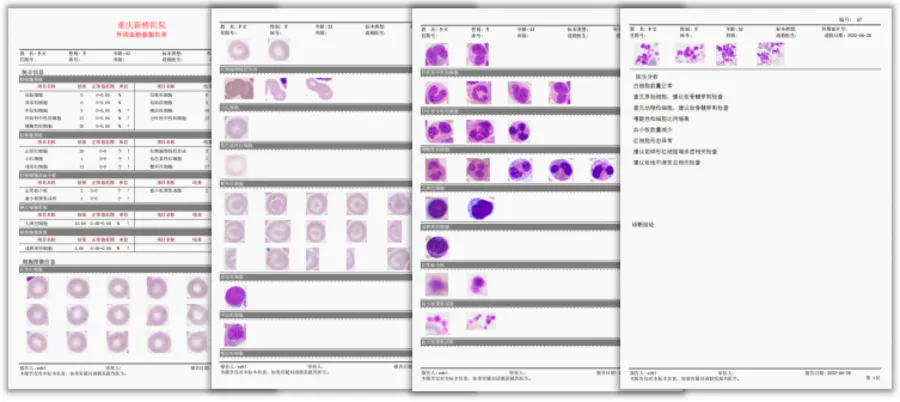
The real-time interaction between upper and lower-level hospitals enables expert forces to reach the grassroots level
Through the remote system of Yibangyi, multi-terminal interconnection is achieved, enabling real-time interaction between upper and lower-level hospitals. Grassroots hospitals can choose any tertiary hospital online to seek review and guidance. This allows the wisdom of morphological experts to reach the grassroots level, enhancing the professional capabilities of grassroots laboratory doctors. It also enables leading hospitals to fully play their leading role in regional assistance, develop jointly, and improve the level of grassroots medical care.
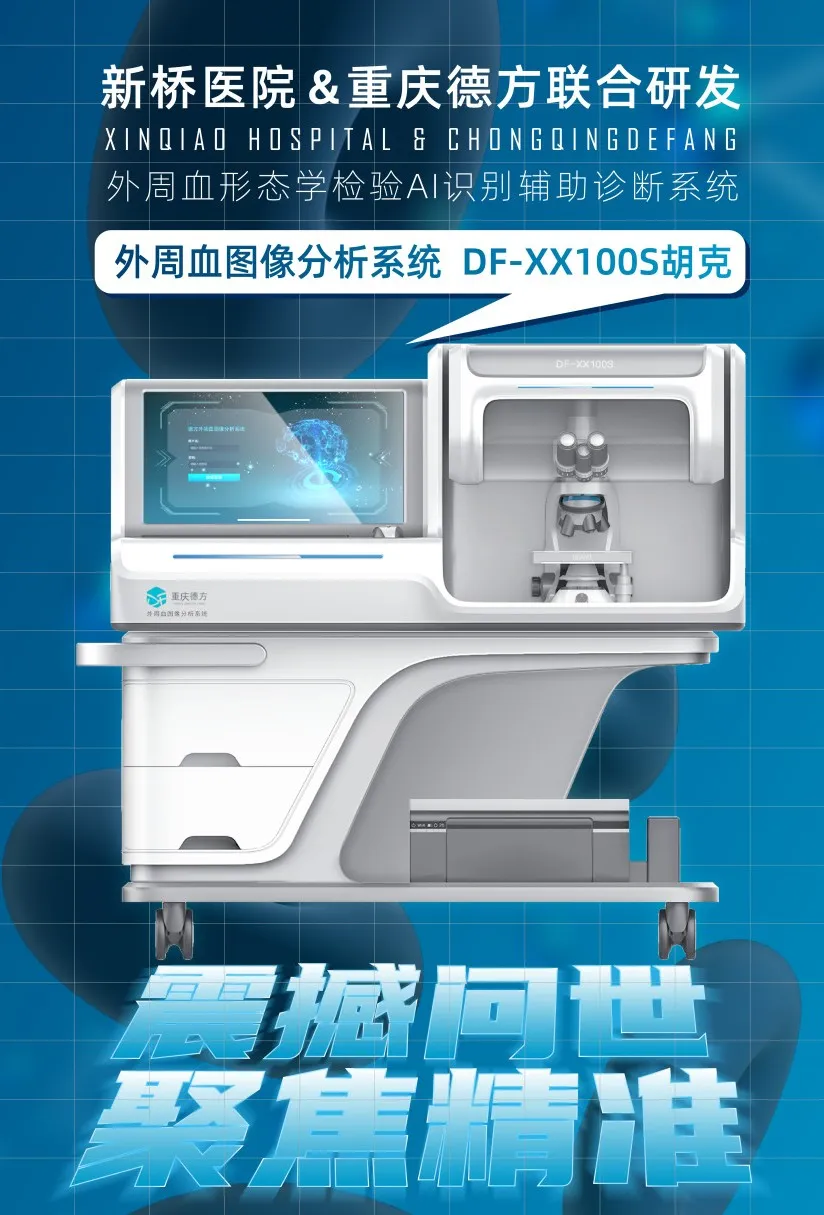
In the future, Chongqing Defang Information Technology Co., Ltd. will continue to deepen its cooperation with Xinqiao Hospital of Army Medical University. Based on clinical needs, it will combine artificial intelligence technology and medical big data, and work in the same direction to actively promote the application of AI technology in clinical practice, enhance the ability and level of morphological examination and diagnosis, and accelerate the development of the clinical examination industry.
- < PrevThe 2023 International Hematology Forum witnessed a "man vs. machine battle"
German AI surpasses the experts in morphological examination - > NextGood news! Chongqing Defang has been listed on the "Artificial Intelligence Medical Device Innovation Task List" of the Ministry of Industry and Information Technology.